
Digital Piano Reviews and Buying Guides
PianoApex helps beginners, students and returning players choose the right digital piano. We cover pianos, stands, benches, headphones and MIDI gear, and explain how each pick is judged on key feel, pedal response, sound quality and everyday ease of use.
PianoApex is a curated guide to digital pianos for beginners, students and returning players. We focus on the details that shape real practice, such as key feel, pedal response, sound quality and ease of use, and we highlight only the picks that earn a place. Topics include digital piano brands, digital pianos by use case, headphones and sound, keyboard and piano stands, keyboard cases, bags and covers, kids and learning keyboards, lighting and music stands, MIDI controllers and connectivity, and piano benches and seating.
Latest Contents
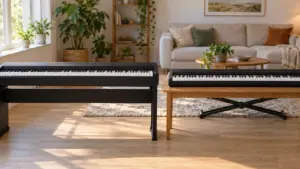
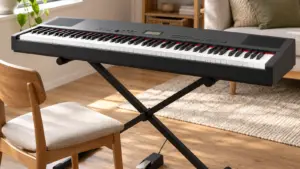
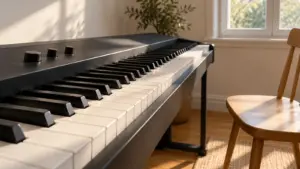

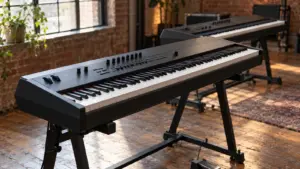
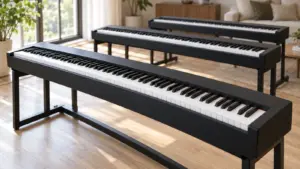
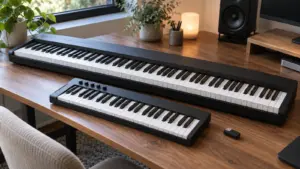
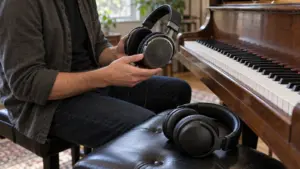
What Is PianoApex?
Headphones & Sound
Learn which headphones, speakers and sound settings give clear, comfortable playback for long sessions, and how to hear your touch and dynamics without disturbing the rest of the household.
MIDI Controllers & Connectivity
Understand USB, MIDI and audio connections, which cables and adapters you need, and how to link a piano to apps, notation software and recording tools without confusing setup steps.
A good digital piano rewards practice, and the right key feel makes you want to return daily.
How PianoApex Chooses Gear
- Key feel first: We judge how the keys respond at soft and loud levels, because touch decides whether a learner keeps practising.
- Pedal response: Sustain pedal action and support are checked, since expressive playing depends on a pedal that feels dependable.
- Sound and comfort: Speaker clarity, headphone comfort and a stable stand and bench count, because long sessions need a comfortable setup.
- Beginner usability: Controls, setup and connections must make sense to a nervous first-time player without special tools or guesswork.
Frequently Asked Questions
What should I look for in a first digital piano?
Look for weighted, graded keys, a full size eighty-eight key keyboard and a dependable sustain pedal input. These features help the instrument feel like an acoustic piano, which builds good technique. Built-in sounds and lesson modes are nice extras, but touch matters most.
Are weighted keys really necessary for learning?
Weighted keys are generally recommended for anyone planning to study piano seriously. They build finger strength and control that carry over to an acoustic instrument. Unweighted keyboards can be fine for casual play or composing, but they may feel very different when moving to a real piano.
Do I need a stand and bench with my digital piano?
Yes, a sturdy stand and an adjustable bench are strongly advised. A wobbly stand affects playing and a poor seat height can strain wrists and shoulders. Choose a stand rated for your keyboard’s weight and a bench that lets your forearms sit level with the keys.
Can I practise quietly with a digital piano?
Yes, quiet practice is one of the biggest advantages of a digital piano. Plug in a comfortable pair of closed-back headphones and the speakers switch off, so you can play late at night without disturbing anyone. Good headphones also help you hear your touch and dynamics clearly.
What does MIDI do on a digital piano?
MIDI lets a piano send note information to a computer, tablet or phone, rather than audio. You can use it with learning apps, notation software and recording programs. Most modern pianos connect through a USB cable, so check which ports your model offers before you buy.
Most Viewed





Most Asked
- 1Yamaha P-45 vs Casio CDP-S160: Which Fits You?Digital Pianos
- 2Piano Courses for Adults: Which Type Fits You?Learning Aids
- 3What to Look for in a Beginner Digital PianoDigital Pianos