
Open Back vs Closed Back Headphones for Piano
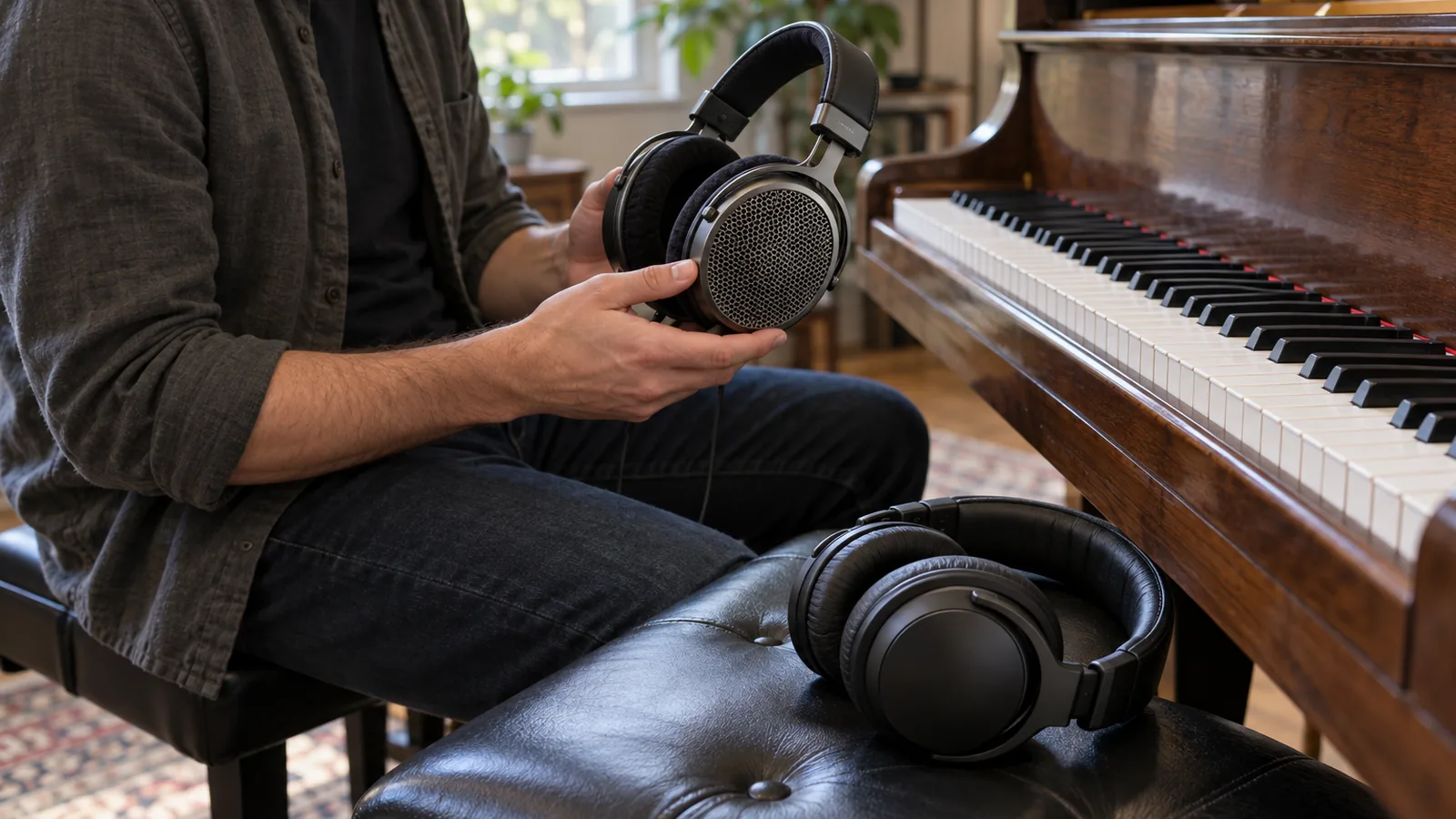
For open back vs closed back headphones for piano, open-back models often sound more spacious, while closed-back models reduce leakage and outside noise; Kawai’s 16–300 Ω range applies to its own digital and hybrid pianos. Choose closed-back headphones if others need quiet, and open-back headphones for a quiet, private room where some sound leakage is acceptable. Neither design blocks key-action noise.
Quick answer
Should you choose open-back or closed-back headphones for piano?
Choose closed-back headphones if you need to limit sound leaking to other people or reduce room noise; choose open-back headphones for a quiet, private space where leakage is acceptable. Open backs often sound airier, while closed backs often feel more intimate, but the effect varies by model.
- Shared room or outside noise: Choose closed-back for more isolation and less leakage.
- Quiet, private room: Choose open-back if you’re comfortable with piano sound reaching others and room noise reaching you.
- Either design: Expect some key-action noise; headphones don’t eliminate it.
- Before buying: Check your piano manual for headphone requirements, and lower the piano volume before plugging in, then raise it gradually.
How Do the Two Designs Change Piano Sound?
Open cups let piano sound pass through the earcups, so room sound reaches you along with the piano. That can make the sound feel airier or more spacious, though the effect depends on the headphone model. You may also hear more of the room around you, including sounds that sealed earcups would reduce.
Closed cups block more sound from passing in either direction, which can make the piano feel more intimate or “in-head”. The seal also reduces room noise reaching your ears, but the amount of isolation depends on fit and model, and neither design guarantees silence. A closed design can therefore make it easier to focus when the room is noisy, while an open design lets you stay more aware of what’s happening around you.
These differences change how you perceive the piano, not what the instrument produces. An airy presentation may make the sound seem less confined to your head, while an intimate presentation may feel more direct. Those are tendencies, not quality rankings: neither design guarantees more accurate sound, and models within either type can differ.
The room also affects what you hear. With open backs, piano audio can be heard by people nearby, and outside sounds can reach you; closed backs reduce that exchange. Your fit matters, too, because a poor seal can change how much room noise gets through. If you’re comparing the two, listen for whether the piano’s tone feels spacious or close, and whether you can hear enough of your surroundings for the way you practice.
Which Type Fits Your Practice Space?
Closed-back headphones fit practice spaces where you need to limit sound reaching other people or reduce room noise; open-back headphones suit quieter, private rooms where leakage is acceptable. Choose based on who can hear you: closed backs help keep piano audio from disturbing people nearby, while open backs let that audio pass into the room.
If you practice in a shared room, near sleeping family members, or where other people need quiet, closed backs are the more practical choice. Their sealed cups reduce sound leakage and provide passive isolation from outside noise, though fit and model affect how well they do this, and they don’t guarantee silence.
Choose open backs when you have a quiet space and the sound reaching others won’t be a problem. Their open cups allow room noise to reach you, so you may hear more of your surroundings while playing; that also means people nearby can hear some of the piano audio. If you need to listen for someone in the room or stay aware of activity around you, that exchange may suit your setup better than stronger isolation.
What Should You Check Before Choosing?
Before choosing headphones, check comfort, fit, volume control, and whether your piano can drive them properly.
- Comfort: Wear them through a piano practice session, not just a quick fit check. Compare clamping pressure and ear-pad comfort, since neither open-back nor closed-back headphones are a universal comfort winner.
- Fit and cable: Check that the earcups sit comfortably and the cable reaches your playing position. Confirm that the plug fits your piano’s headphone jack, using the correct adapter if needed.
- Sound level: Turn the piano volume down before connecting the headphones, then raise it gradually to a comfortable level. Avoid listening at high volume for long periods.
- Piano output: Check your piano manual for its recommended headphone impedance and headphone-output rating. Impedance alone can’t tell you whether headphones will sound good or reach adequate volume, so compare output power or voltage with headphone impedance and sensitivity when the manual provides those figures.
Check your piano model’s requirements before choosing headphones, since impedance needs vary. Kawai specifies a range of 16–300 Ω for its digital and hybrid pianos, while the Casio AP-300/AP-S200 guide calls for headphones rated at 32 Ω or more and a maximum input of 150 mW or more. Follow your piano’s manual.
Open-Back vs Closed-Back at a Glance
Closed-back headphones are usually the better fit when you need to limit sound leakage or reduce room noise; open-back headphones suit quieter, private practice spaces. The main trade-off is isolation versus a more spacious sound, though the result varies by model.
| Design | Sound leakage | Isolation from room noise | Perceived spaciousness | Space that suits it |
|---|---|---|---|---|
| Open-back | More sound passes through the earcups | Less room-noise isolation | Often airier or more spacious | Quiet, private spaces where leakage is acceptable |
| Closed-back | Designed to reduce sound leakage | Provides passive isolation | Often more intimate or “in-head” | Shared spaces or rooms with outside noise |
The designs differ in how much sound passes through the earcups: open backs let piano sound reach people nearby and let room noise reach you, while closed backs reduce leakage and provide passive isolation. Neither design guarantees silence, and fit and model affect the result. Use the spaciousness comparison as a general tendency, not a promise about a particular pair, since individual models vary.
Frequently Asked Questions
Can I use ordinary headphones with a digital piano?
Yes, ordinary wired stereo headphones generally work if their plug matches the piano’s headphone jack, directly or with the correct adapter. Check the manual for the piano’s headphone requirements, since impedance needs vary by model; turn the volume down before connecting, then raise it gradually.
Are closed-back headphones good for a digital piano?
Yes, closed-back headphones are a practical choice when you need to reduce piano sound reaching others or block some room noise. Their fit and model affect how much they isolate, and they won’t remove the mechanical sound of the keys.
Which headphones are better for silent piano practice?
Closed-back headphones are usually better for limiting sound leakage and reducing outside noise, especially in a shared room. Key-action noise remains audible, though, because headphones don’t eliminate the mechanical sound of the keys.
Do headphones change how an acoustic piano sounds?
Headphones change what you hear from the piano, not what the instrument produces. Open-back designs often sound airier, while closed-back designs often feel more intimate, but those are tendencies that vary by model.
Do open-back headphones work well for recording piano?
Open-back headphones can work for monitoring piano when sound leaking into the room won’t disturb others or interfere with nearby microphones. Their open cups also let room noise reach you, so closed backs are more practical if you need isolation while recording.
Conclusion
If you practice where others need quiet, choose closed-back headphones; if you have a quiet, private room and want to stay aware of its sounds, choose open-back. Then check your piano’s manual for headphone requirements, confirm the plug and cable will reach your playing position, and try the fit before settling on a pair. Start with the piano volume low and raise it gradually to a comfortable level.
Sources
- kawai-global.com (kawai-global.com)
- usa.yamaha.com (usa.yamaha.com)
- Open-Back vs. Closed-Back Headphones: Which Type Is Best For You? (rtings.com)
- kawai-global.com (kawai-global.com)
- support.sennheiser-hearing.com (support.sennheiser-hearing.com)
- support.casio.com (support.casio.com)
- pianobuyer.com (pianobuyer.com)
- usa.yamaha.com (usa.yamaha.com)
