8 Best Casio CDP-S160 Alternatives for 2026
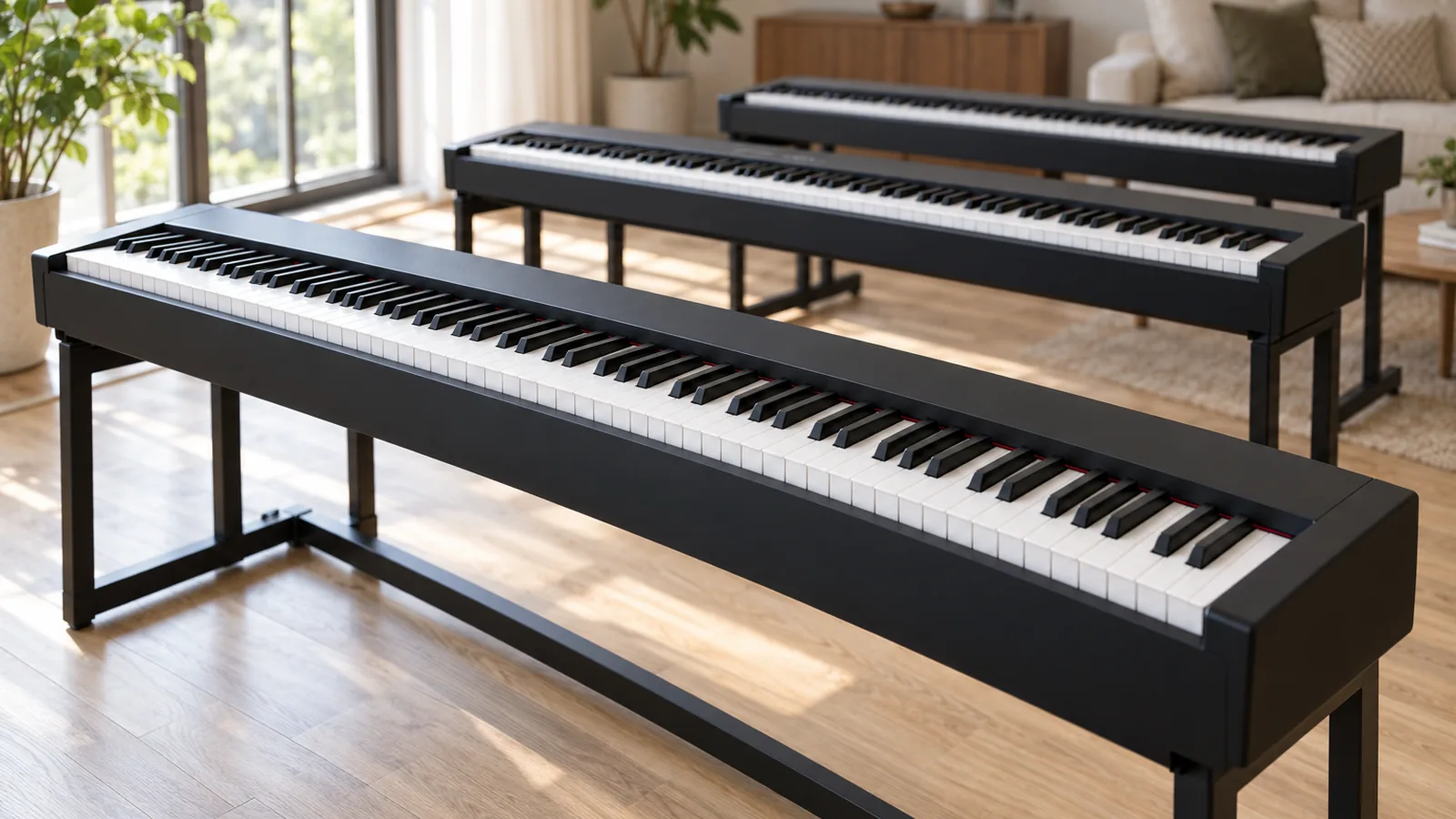
The Roland FP-30X Digital Piano is the best overall pick for most players who want a weighted, piano-like feel at home. For practice-focused keys, try the Kawai ES120 Digital Piano or Yamaha Arius Digital Piano. For more tones, rhythms, and connectivity, look at the Casio CDP-S360 Digital Piano, Casio Privia PX-770 Digital Piano, or Yamaha Digital Piano Keyboard. For a simpler setup, the Roland FP-10 Digital Piano or Alesis Recital Play 88-Key Piano Keyboard fit.
Four factors decide the choice: key action, power options, tone count with polyphony, and connectivity. Start with the keys, because feel is personal and you’ll notice it every session.
Battery power decides where you can play. The Casio CDP-S160 runs on six AA batteries, which Casio rates for about 13 hours of operation.
The comparison table that follows lines up each pick by keys and action, power options, and sound and polyphony.
Our top picks for casio cdp-s160 alternatives
- Best Overall: Roland FP-30X Digital Piano, a portable choice for home practice, lessons, and app-connected playing
- Best for Built-In Variety: Casio CDP-S360 Digital Piano, portable with feature-rich practice and accompaniment
- Best for Portable Playing: Kawai ES120 Digital Piano, a portable 88-key piano for players who practice at home or play gigs
| Roland FP-30X Digital Piano |  | Best Overall | Keys and action: 88 keys, PHA-4 weighted action | Power options: AC adapter only | Sound and polyphony: SuperNATURAL; 256-note polyphony | VIEW LATEST PRICE | Read Our Analysis |
| Casio CDP-S360 Digital Piano |  | Best for Built-In Variety | Keys and action: 88 keys; Scaled Hammer Action II | Power options: AC adapter or 6 AA batteries | Sound and polyphony: 700 tones; 128-note polyphony | VIEW LATEST PRICE | Read Our Analysis |
| Kawai ES120 Digital Piano |  | Best for Portable Playing | Keys and action: 88 keys, Responsive Hammer Compact | Power options: AC adaptor (PS-129); power cable; power consumption: 9 W | Sound and polyphony: 25 sounds; 192-note polyphony | VIEW LATEST PRICE | Read Our Analysis |
| Casio Privia PX-770 Digital Piano |  | Best for Three-Pedal Practice | Keys and action: 88 keys, Tri-Sensor II hammer action | Power options: 12V AC adaptor; no battery operation stated | Sound and polyphony: 19 tones; 128-note polyphony | VIEW LATEST PRICE | Read Our Analysis |
| Yamaha Arius Digital Piano |  | Best for Home Lessons | Keys and action: 88 keys, GHS weighted action | Power options: AC adapter; no battery operation stated | Sound and polyphony: 10 voices; 64-note polyphony | VIEW LATEST PRICE | Read Our Analysis |
| Roland FP-10 Digital Piano |  | Best for Bundled Setup | Keys and action: 88 keys, PHA-4 hammer action | Power options: AC adapter only | Sound and polyphony: 36 tones, 96-voice polyphony | VIEW LATEST PRICE | Read Our Analysis |
| Yamaha Digital Piano Keyboard | 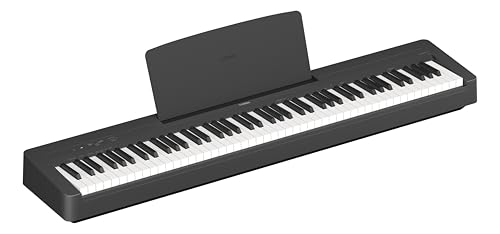 | Best for Bluetooth Audio | Keys and action: 88 keys, GHC weighted action | Power options: 12 V AC adapter; no battery option stated | Sound and polyphony: 10 voices; 64-note polyphony | VIEW LATEST PRICE | Read Our Analysis |
| Alesis Recital Play 88-Key Piano Keyboard |  | Best for Battery Power | Keys and action: 88 touch-sensitive, unweighted keys | Power options: Adapter or 6 AA batteries | Sound and polyphony: 480 voices | VIEW LATEST PRICE | Read Our Analysis |
More Details on Our Top Picks
Roland FP-30X Digital Piano
Home pianists and students who outgrew toy-like keys will find the top overall pick on this list. Practice pays off most when the keys feel like the piano at your lesson. The PHA-4 weighted action has escapement and ivory-feel keys, and owners praise it. The Piano Partner 2 app picks sounds and metronome settings.
The FP-30X ships with a music rest, AC adapter, and DP-2 pedal, so the box covers the basics. Its 22-watt speakers draw mixed reviews: some owners criticize the built-in sound, while others say it sounds good through external speakers. Some owners also report a clunky or noisy key return. Plug wired headphones into its headphone jack.
Pros: The PHA-4 key action · Good value for the feature set · Bluetooth audio/MIDI and USB support.
Cons: Some owners criticize the built-in speaker sound · Some owners report clunky or noisy key return.
Skip it if: you want to play away from a power outlet, because the FP-30X runs only on its AC adapter.
- Keys and action:88 keys, PHA-4 weighted action
- Power options:AC adapter only
- Sound and polyphony:SuperNATURAL; 256-note polyphony
- Built-in speakers:Built-in stereo speakers, 22 W
- Connectivity:Bluetooth audio/MIDI; USB; headphone jacks
- Practice features:Metronome; recording; Twin Piano
- Included accessories:Music rest, AC adapter, DP-2 pedal
- Instrument weight:32.7 lb
Casio CDP-S360 Digital Piano
700 built-in tones and 200 rhythms give beginners and advanced players the variety they want. The 88 full-size keys use Scaled Hammer Action II with simulated ivory and ebony textures. The 128-note polyphony lets long chords ring out. Duet mode, a metronome and lesson part selection give you practice tools built in.
Power comes from the included AC adapter or from six AA batteries, so you can play away from an outlet. At 24.03 lb, it moves easily between a room and a studio. Owners report that finding sounds and rhythms can take extra menu work. The 6-track MIDI recorder lets you layer parts for songwriting, and the free Casio Music Space app adds more learning options.
Pros: Its light, easily transported build (2023) · An owner reports a good-feeling keybed and useful MIDI function (2023) · An owner says the speakers sound pretty good (2023).
Cons: Sounds and rhythms can take more menu presses to reach (2025) · The piano has USB MIDI only, with no traditional 5-pin MIDI ports (2025).
Skip it if: you rely on traditional 5-pin MIDI, because this model only has USB MIDI.
- Keys and action:88 keys; Scaled Hammer Action II
- Power options:AC adapter or 6 AA batteries
- Sound and polyphony:700 tones; 128-note polyphony
- Built-in speakers:2 speakers; 8W + 8W
- Connectivity:USB-A/B; audio in; headphone/output
- Practice features:Duet, metronome, 6-track MIDI recorder
- Included accessories:Sustain pedal, music stand, AC adapter
- Instrument weight:24.03 lb
Kawai ES120 Digital Piano
Gig players and home pianists who need 88 keys for portable playing will like this piano. Its 25 built-in sounds and 192-note polyphony let many notes ring at once. Owners call the key action piano-like (2024) and the sound warm and dynamic (2024). It weighs 26.46 lb for easy carrying and measures 51.38 inches wide.
The bundle includes an AC adaptor (PS-129), an F-1SP switch pedal, a music rest, and the owner’s manual. Practice tools include an adjustable metronome, a song recorder, and 9 lesson books with 377 pieces via the PiaBookPlayer app. Use the Bluetooth audio or headphone output if the built-in speakers don’t suit your room.
Pros: The key action as piano-like (2024) · Owners describe the sound as warm and dynamic (2024) · An owner reports using it successfully for gigs (2026).
Cons: Some owners find the action too light (2024) · One owner found the built-in speakers poor (2024).
Skip it if: you plan to play in a large room on the built-in speakers.
- Keys and action:88 keys, Responsive Hammer Compact
- Power options:AC adaptor (PS-129); power cable; power consumption: 9 W
- Sound and polyphony:25 sounds; 192-note polyphony
- Built-in speakers:Built-in speakers
- Connectivity:Bluetooth audio/MIDI; USB-MIDI
- Practice features:Adjustable metronome
- Included accessories:Power cable
- Instrument weight:26.46 lb
Casio Privia PX-770 Digital Piano
Compared with the Casio CDP-S360, this console suits home learners who want three-pedal practice built in. The pedal unit has damper, soft, and sostenuto pedals, and the damper supports half-pedaling for finer sustain control. The 88-key Tri-Sensor II Scaled Hammer Action has simulated ebony-and-ivory key surfaces and adjustable touch sensitivity. The AiR sound source includes a stereo grand piano with damper resonance across 19 tones.
The box includes the three pedals, music stand, and AC adaptor. Expect the 69.5 lb console weight to make moving it a planned job. Reviewers say the speakers lack volume and bass, so plan on headphones through one of the two jacks for late practice.
Pros: The key action and playing feel · Compact console cabinet suits home practice · Three-pedal unit and stand make a complete setup.
Cons: Reviewers say speakers lack volume and bass · No Bluetooth connectivity.
Skip it if: you need Bluetooth or speakers loud enough to fill a large room.
- Keys and action:88 keys, Tri-Sensor II hammer action
- Power options:12V AC adaptor; no battery operation stated
- Sound and polyphony:19 tones; 128-note polyphony
- Built-in speakers:2 8W speakers
- Connectivity:USB Type B; two headphone/output jacks
- Practice features:Duet, metronome, 2-track MIDI recorder
- Included accessories:3 pedals; AC adaptor; music stand
- Instrument weight:69.5 lb
Yamaha Arius Digital Piano
Home learners who want a console for lessons, with three pedals and shared headphone listening, fit this model well. The 88-key GHS weighted action has touch response, and owners praise its acoustic-like key feel. Duo mode splits the keyboard for side-by-side play, and the three pedals include a damper that supports half-pedaling. Owners describe the piano sound as clear, with the grand piano voice plus nine other voices.
Owners report setup went smoothly, and the bench is included. It runs on an AC adapter and weighs 82.69 lb, so choose its spot first. One review calls the console hard to move, and another notes it has no Bluetooth. The USB-to-host port links it to a computer.
What to check: Measure the floor space the cabinet and bench will need.
Pros: Owners praised the acoustic-like key feel · Owners described the piano sound as clear · Owners found it well suited to home use.
Cons: One review notes a simpler sound engine than the YDP-145 · One review notes no Bluetooth.
Skip it if: you move the instrument between rooms often, because this console weighs 82.69 lb.
- Keys and action:88 keys, GHS weighted action
- Power options:AC adapter; no battery operation stated
- Sound and polyphony:10 voices; 64-note polyphony
- Built-in speakers:2 12 cm speakers; 6 W each
- Connectivity:USB-to-host; two headphone jacks
- Practice features:Duo mode, metronome, dual headphones
- Included accessories:Bench; built-in three-pedal unit
- Instrument weight:82.69 lb
Roland FP-10 Digital Piano
Owners report the PHA-4 keys feel strong, which suits learners wanting a bundled home-practice setup. The 88-key action has escapement and ivory-feel keys, heavier in the lows and lighter in the highs. The SuperNATURAL Piano engine offers 96-voice polyphony for full sound. The set includes a stand, bench, sustain pedal, and closed-back headphones.
Setup means placing the stand and bench, then plugging in the AC adapter, since there’s no battery option. It weighs 27.8 lb, so pick a spot you won’t move often. Pair it with Bluetooth MIDI or USB Type B to use GarageBand and other apps. Some owners find the action too heavy and report weak speaker volume, so plan on the included headphones.
Pros: The hammer-action key feel · Describe the action as a strong feature · Owner feedback says it suits headphone practice.
Cons: Some owners find the key action too heavy · Some owners report built-in sound or speaker volume is weak.
Skip it if: you want a light, easy-touch action or speakers that fill a room, since some owners find the keys heavy and the volume low.
- Keys and action:88 keys, PHA-4 hammer action
- Power options:AC adapter only
- Sound and polyphony:36 tones, 96-voice polyphony
- Built-in speakers:2 12 cm speakers
- Connectivity:Bluetooth MIDI, USB, headphone/output
- Practice features:Twin Piano, metronome, 17 songs
- Included accessories:Stand, bench, sustain pedal, headphones
- Instrument weight:27.8 lb
Yamaha Digital Piano Keyboard
At 24.47 lb, this slim 88-key piano suits beginners who want Bluetooth audio for play-along practice. It streams audio over Bluetooth, so you can play along with your favorite songs. The 88 weighted keys with GHC action give a natural acoustic piano feel under your fingers.
The box includes a music rest, sustain foot switch, and 12 V AC adapter. Two 7 W speakers for clear playback carry the Yamaha CFIIIS piano sound. Duo mode splits the keyboard for side-by-side playing, and the metronome covers tempos from 32 to 280.
One owner praised the sound, but another reported a rattling key. Its light frame moves easily between rooms, but it cannot record your playing.
Cons: One owner reported a rattling key.
Skip it if: you want to record your sessions, because this model has no recording function.
- Keys and action:88 keys, GHC weighted action
- Power options:12 V AC adapter; no battery option stated
- Sound and polyphony:10 voices; 64-note polyphony
- Built-in speakers:2 speakers; 7 W each
- Connectivity:Bluetooth audio; USB TO HOST
- Practice features:Duo mode; metronome; no recording
- Included accessories:Music rest, footswitch, AC adapter
- Instrument weight:24.47 lb
Alesis Recital Play 88-Key Piano Keyboard
Beginners who want to practice away from a wall outlet will find battery power built in. The Alesis Recital Play runs on six AA batteries (not included) or its power adapter. Its 88 touch-sensitive keys cover the full piano range, and 480 sounds plus 160 rhythms give beginners accompaniment for simple songs.
Setup comes down to the included stand and power adapter. Plug a phone or tablet into the 1/8-inch aux input to play along, and use the headphone output to mute the speakers. The keys are unweighted, and one owner describes them as slippery. USB-MIDI links it to the Skoove and Melodics lessons on a Mac or PC.
Pros: Full 88-key range for beginner practice · USB-MIDI offers use with learning software · The light-feeling keys play OK.
Cons: Keys are touch-sensitive, not weighted · Owner describes the keys as slippery.
Skip it if: you need weighted keys, since these 88 keys are touch-sensitive but unweighted.
- Keys and action:88 touch-sensitive, unweighted keys
- Power options:Adapter or 6 AA batteries
- Sound and polyphony:480 voices
- Built-in speakers:Built-in speakers
- Connectivity:USB-MIDI; aux-in; headphone-out
- Practice features:Metronome, lesson, record, split
- Included accessories:Adapter; music/tablet stand
- Instrument weight:10.69 lb
What Each Item Is For
The 8 picks at a glance: what each one is and who it suits.
| Item | Type | Best for |
|---|---|---|
| Roland FP-30X Digital Piano | Upgraded portable digital piano | Portable home practice, lessons, and app-connected playing |
| Casio CDP-S360 Digital Piano | Feature-rich portable digital piano | Portable, feature-rich practice and accompaniment |
| Kawai ES120 Digital Piano | Portable stage piano | Players wanting a portable 88-key piano for home practice or gigs |
| Casio Privia PX-770 Digital Piano | Console digital piano with three-pedal unit | Home learners wanting a console piano with weighted keys and three pedals |
| Yamaha Arius Digital Piano | Portable digital piano with furniture-style stand | Home learners wanting a console, graded action, three |
| Roland FP-10 Digital Piano | Portable piano with graded hammer action | Learners wanting weighted keys and a bundled home-practice setup |
| Yamaha Digital Piano Keyboard | Portable digital piano with Bluetooth audio | Beginners wanting a compact 88-key piano with Bluetooth audio |
| Alesis Recital Play 88-Key Piano Keyboard | Portable digital piano with built-in accompaniment | Beginners wanting portable, battery-powered practice with accompaniment and many sounds |
What to skip
Three shortcuts can steer you wrong when you compare alternatives to the CDP-S160.
- Treating one comment as a verdict: In a 2026 owner discussion, one player called the CDP-S160 action light, while another said it felt close to the Yamaha P-145. Those are two personal impressions, and nobody ran a controlled side-by-side test. Use them as a reason to play both keyboards yourself, not as proof that either one is weak.
- Assuming one action is objectively better: A 2022 thread features one player who preferred the Roland FP-10 action over earlier Casio CDP-S100 and CDP-S150 models. That’s one preference, and it compares older Casio models, not the CDP-S160 itself.
- Paying for features you won’t use: The CDP-S160 adds Duet mode and a MIDI recorder over the CDP-S110, which shares its 88 keys, 64-note polyphony, and 10 tones. If you play alone and never record MIDI, the CDP-S110 covers the same core playing.
Matching spec sheets don’t guarantee matching feel. The Yamaha P-145 lists 10 voices and a USB audio interface, the same tone count and 64-note polyphony as the CDP-S160. Compare the numbers first, then judge the keys by playing them for a few minutes.
If sound variety is your main goal, tone count is the easiest number to compare. The Roland FP-10 offers 36 tones, compared with 10 on the CDP-S160. That gap matters more for a songwriter who layers sounds than for someone who mostly practices scales. Pick the feature that matches how you play, and let that drive your shortlist.
Frequently Asked Questions
Is the Casio CDP-S360 a worthwhile upgrade from the CDP-S160?
Yes, if the CDP-S160’s limits are what you run into. One 2026 owner described its action as light, so an upgrade makes the most sense when that is your main complaint. Otherwise the gain may be small for everyday practice.
Which alternative has the best piano key action for a beginner?
The Roland FP-10 is a strong pick for key feel, with its PHA-4 Standard action. One 2022 owner discussion includes a player who preferred its action over earlier Casio CDP-S100 and CDP-S150 models.
Is 88 keys necessary for learning piano at home?
No, you can start on fewer keys, but 88 keys cover the full range that most piano music uses. The CDP-S160 has 88 keys, and fewer keys cut the notes you can play, so choose 88 if you plan to follow full-range pieces.
How do I connect a digital piano to my computer?
Connect the piano with a USB cable or a MIDI interface, then select that port as the input in your music software. This sends your notes to the computer so your software or lessons can respond to them. If your piano has no USB port, a USB-MIDI interface bridges the gap.
Which alternative has the best speakers for home practice?
Speaker reviews are mixed across these picks, so headphones are the safer choice for home practice. If you want sound in the room, connect powered speakers to the piano’s output so you aren’t limited by built-in volume.
Conclusion
If you need to play away from an outlet, pick the Casio CDP-S360, since it runs on AC power or six AA batteries. If three pedals and a console for lessons matter most, go with the Casio Privia PX-770 or the Yamaha Arius. If Bluetooth audio for play-along practice is your priority, the Yamaha Digital Piano Keyboard fits best.
Start by writing down the one feature you can’t give up, then reread the “Skip it if” note for each model that offers it. That single feature can narrow the list quickly.
Sources
- casio.com (casio.com)
- reddit.com (reddit.com)
- reddit.com (reddit.com)
- casio.com (casio.com)
- usa.yamaha.com (usa.yamaha.com)
- Roland – FP-10 | Pian Digital (roland.com)